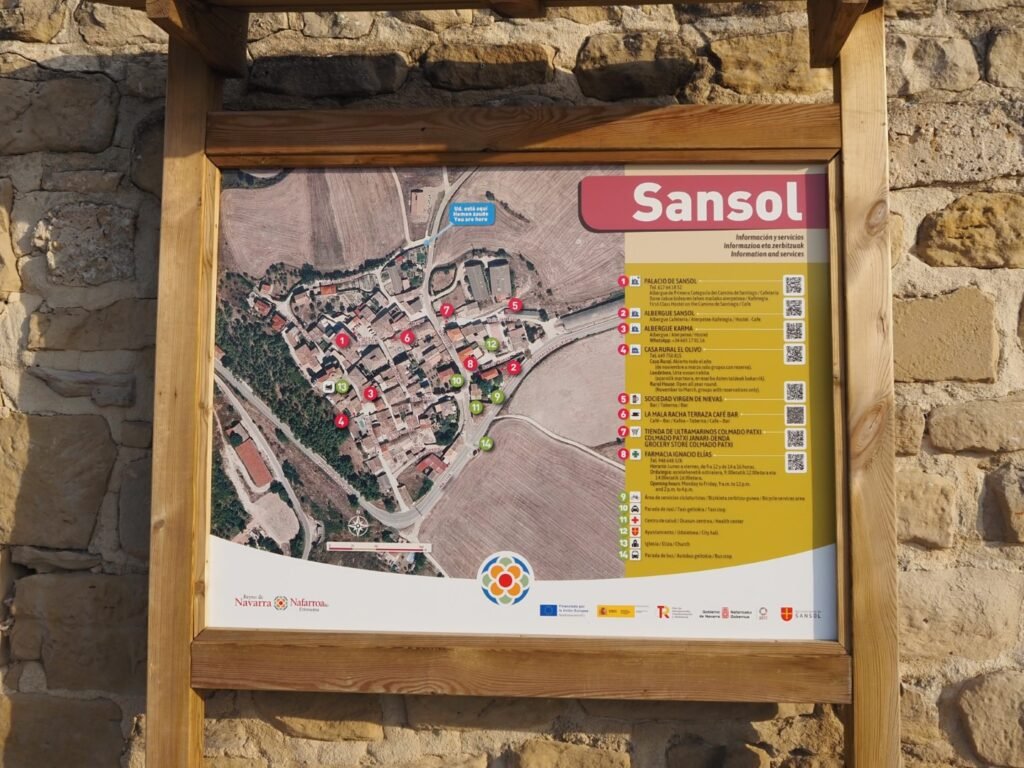
I started planning my trip to Spain three months before the big day. By then, almost every place to stay along the path where the moon’s shadow would cover the sun was either fully booked or outrageously expensive. Only the tiny village of Sansol, in Navarre, still had beds at a very reasonable price. A place that eclipse chasers, whether driven by passion or trend, seemed to have overlooked.
From Pamplona, an efficient bus service took me straight there — ticket bought online, barcode reader next to the driver, backpack stored in the luggage compartment.
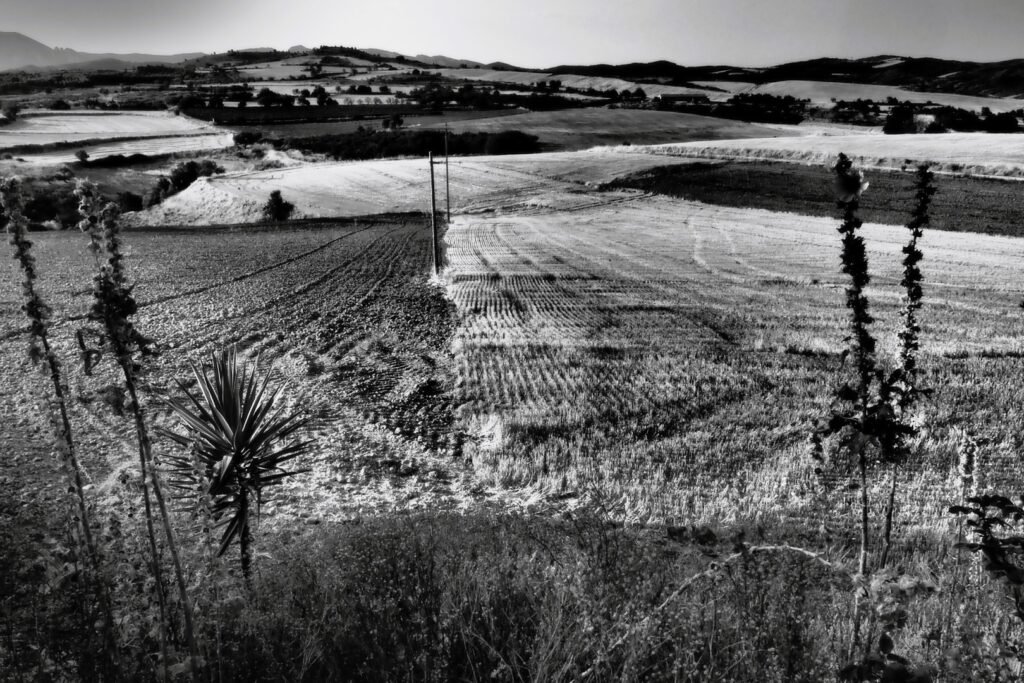
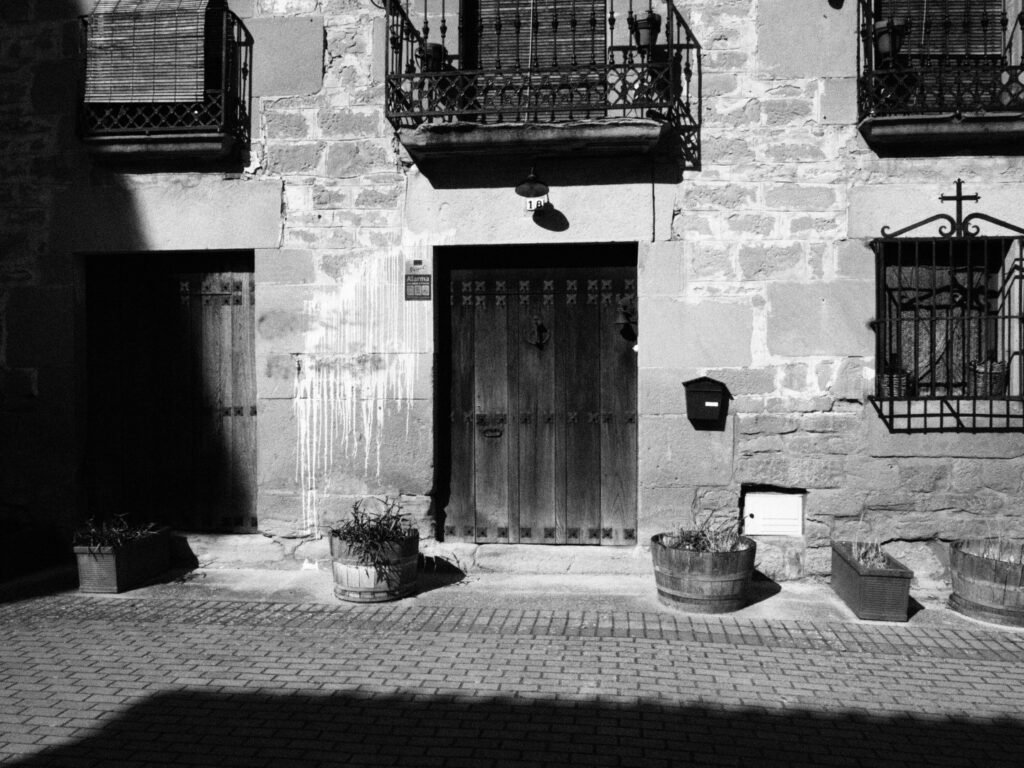
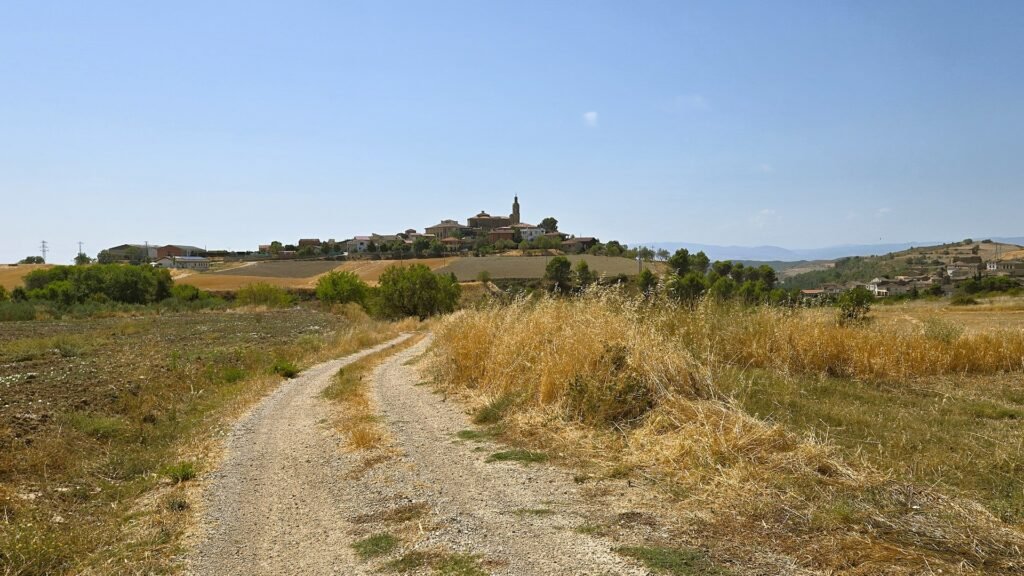
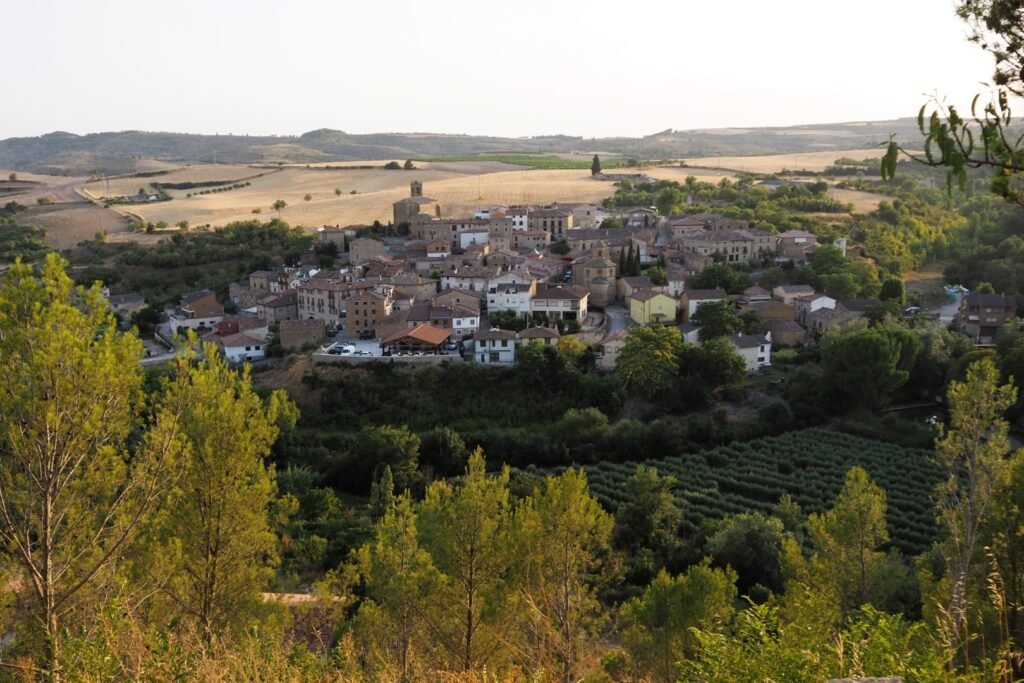
The hostel occupied an old sand-colored stone castle on higher ground, right next to the church. From there, you could see Torres del Río, the neighboring village below, nestled in the hollow of the valley. All around stretched parched fields divided into patches of yellow, olive green, and brown, dotted with a few fruit trees. In this part of the country, in the middle of August, everything seemed to be waiting for the spark that would set it all to flame.
It was around 40°C in the afternoon. Yet the heat of the sun seemed to evaporate the moment you stepped into the shade. Far less oppressive and sticky than in the concrete metropolises of Barcelona and Madrid. Without air conditioning, the temperature didn’t fall below 25°C until around two in the morning, finally allowing me to sleep.
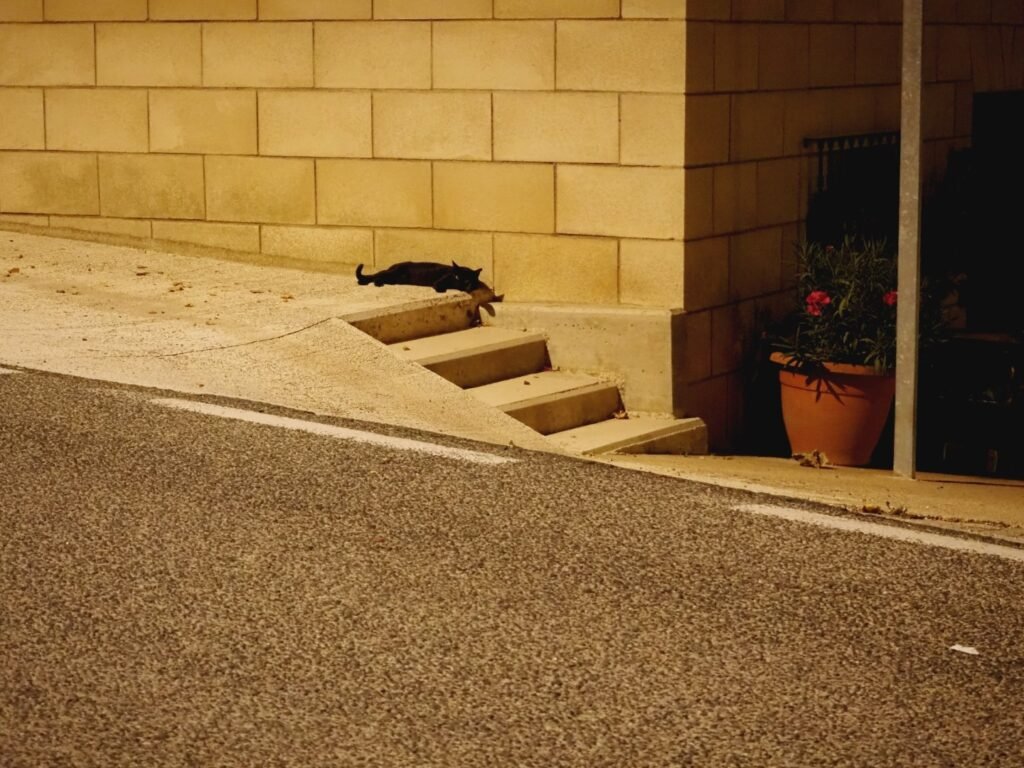
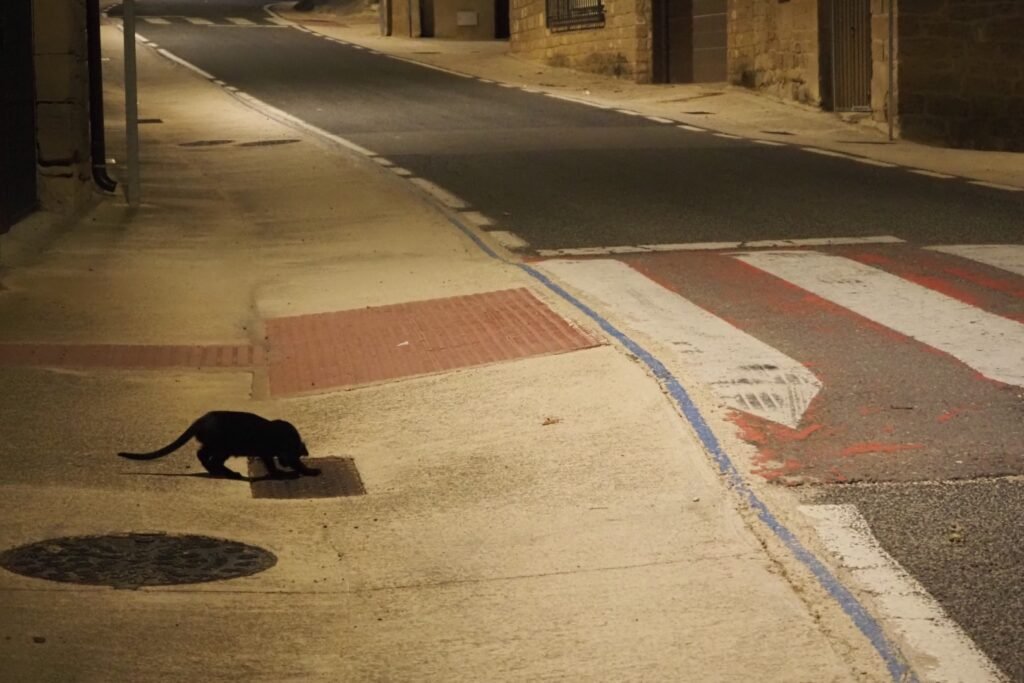
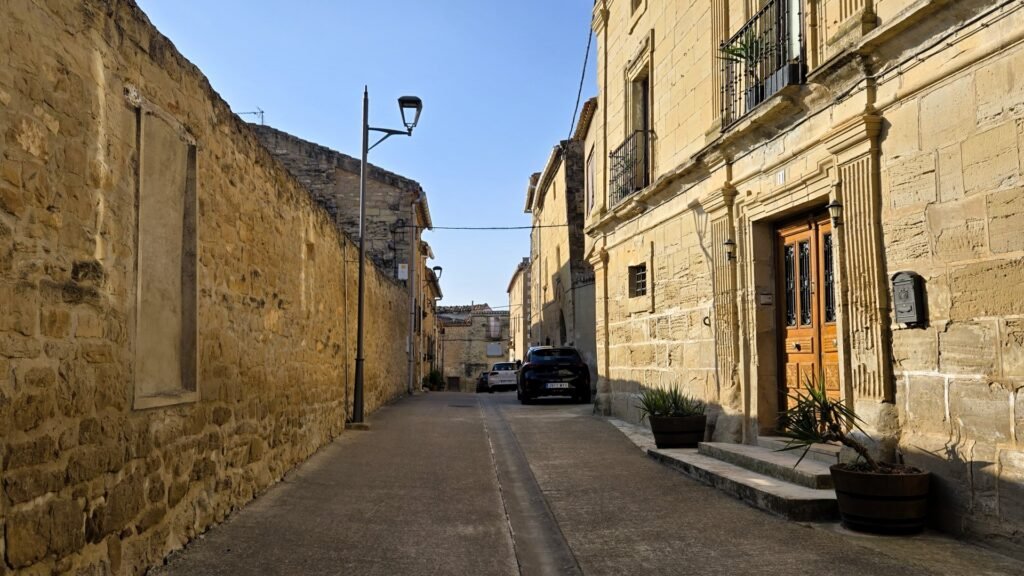
Sansol lies on the Camino Francés. Here, pilgrims are gladly welcomed, whatever their true motivation may be. Everything was clean, maintained, and restored. No ruins from any era left abandoned, no piece of scrap metal or sandstone left without a purpose. Even the garbage was carefully sorted into the proper bins. Only the cars, more prevalent during this busy period, and a few skinny cats disturbed this scene frozen in time.
The people running the hostel looked after everyone, helped by volunteers who lent a hand. A few groups had come specifically for the eclipse: English, French, and Chinese. Other travelers had arrived by chance and were leaving just as randomly. On the Camino, the population changes every day.
There was nothing to do in the village, and that was just fine. The only convenience store and market, run by an old local man, served coffee and the best fresh croissants in the region. It was the middle of the week. The sky was perfectly blue, while the days before and after had been marked by late-afternoon showers.
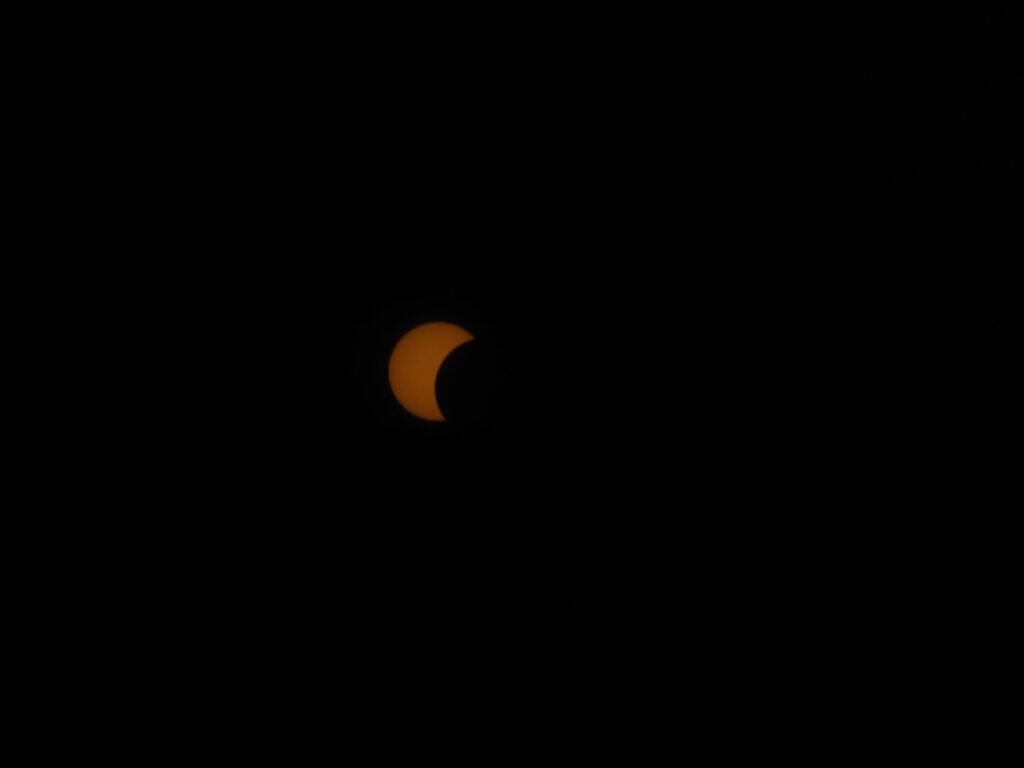
The eclipse arrived right on schedule. It may be the most predictable natural event there is: down to the second, the moon moves in front of the sun and begins to bite into its edges.
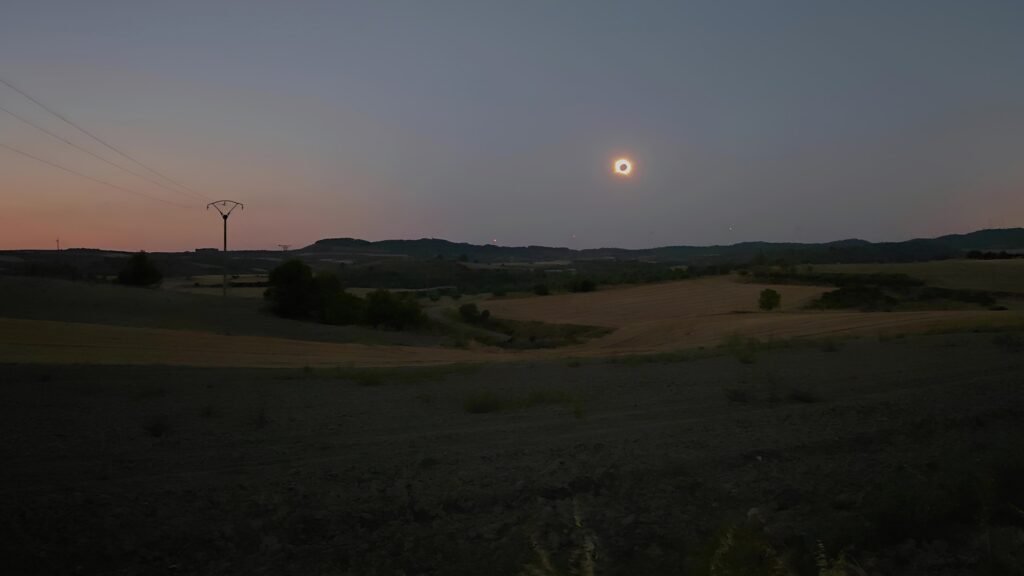
The village had gathered around the viewpoint by the church. Chairs had been brought out, cameras set up, and grandmothers rolled outside. From another hostel lost in the middle of the fields, along a small gravel trail, the view of the setting sun was completely unobstructed.
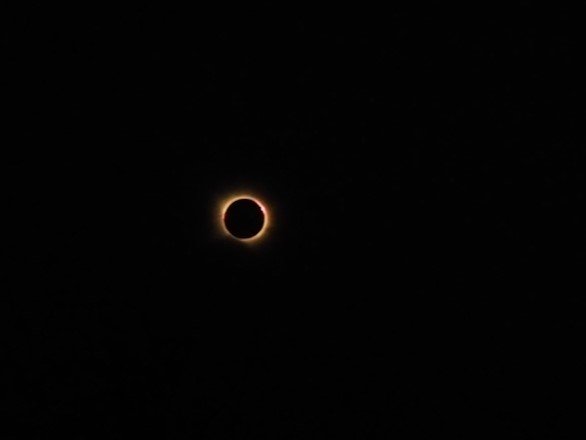
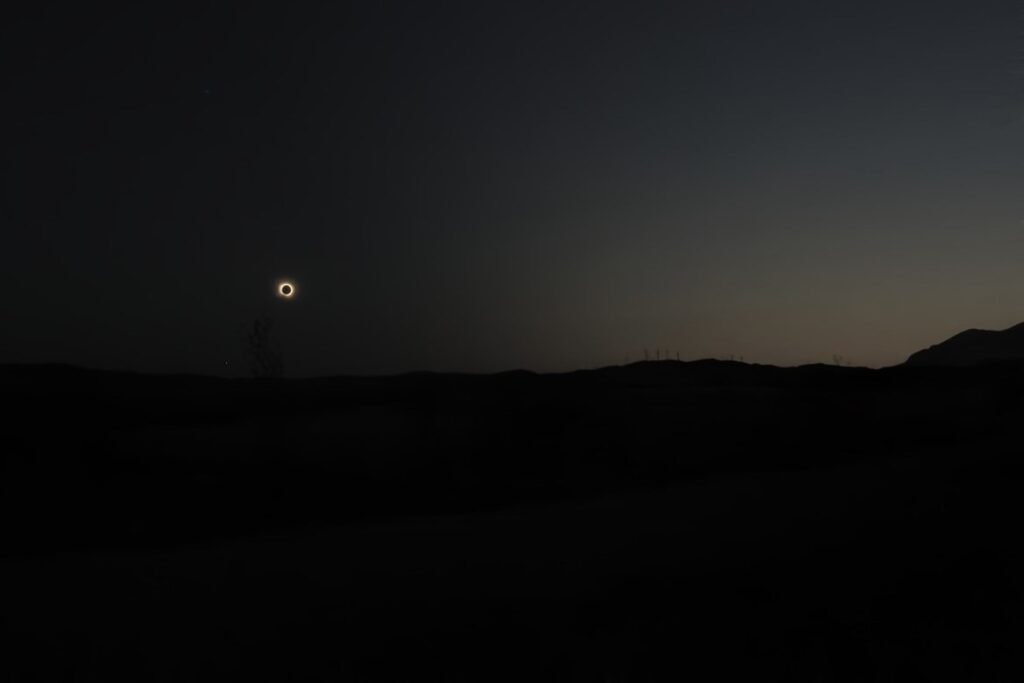
The countdown began, and there it was. The light started to change. The landscape lost its warmth, then its colours. A half-darkness settled in, with the strange impression that another sun was rising somewhere farther along the horizon. It was the moon’s shadow passing over us. For a few moments, we were no longer on Earth.
I train my brain to see the positive in the unexpected. To enjoy a sudden storm, an unexpected holiday, an earthquake that comes along and throws every plan into disarray.
But what happens when everything turns out even better than expected? When the buses arrive on time, the accommodation is perfect, the people are kind, and the sky stays completely clear at the exact moment it needs to be? Do we start looking for something negative just to satisfy the universe’s need for balance?
My first eclipse had been obscured by an overcast sky pouring rain onto our raised faces. The second had been spoiled by the light pollution of a city still too close by. This time, nothing got in the way. Hundreds of kilometers travelled for 60 seconds of otherworldly darkness.
Then the sun came back, as if nothing had happened.