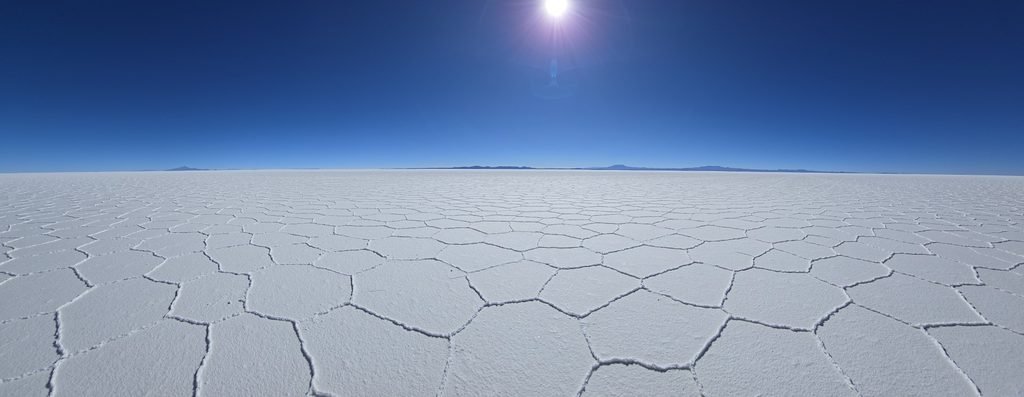
The world’s largest salt flat sits at 3,660 meters above sea level in the Bolivian desert. For 100 km edge to edge, all you see is an immaculate white surface that appears convex as it extends uninterrupted towards the horizon.
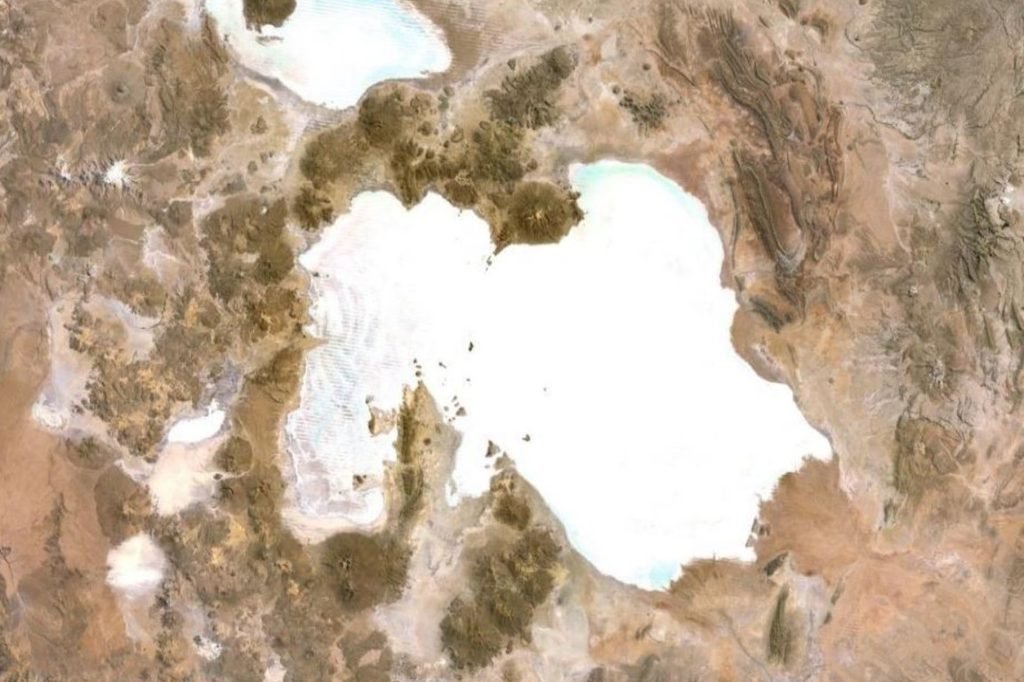
Under your feet, the thick, rigid salt crust is formed by layers of sedimentary deposits dating back to the Pleistocene, when ancient lakes covered much of the southern Altiplano. As the climate became drier, these lakes gradually evaporated, leaving behind layers of salt and other minerals. Rivers carried additional minerals from volcanic sources into the basin.
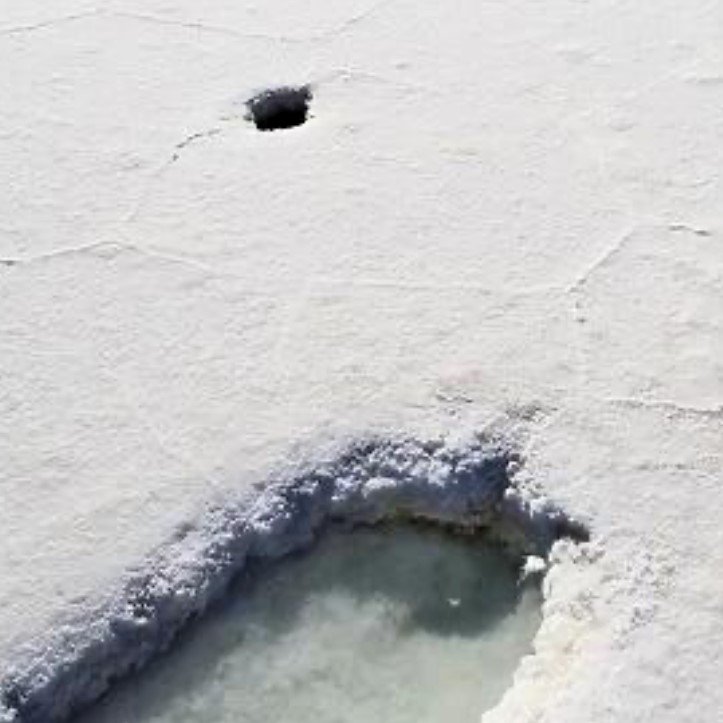
During the dry season, the salt crust becomes extremely hard and can reach several metres in thickness. The Ojos de Agua, or “eyes of the water”, are openings in the flat crust acting as natural vents. They offer a glimpse into the structure of the salt crust, with salt crystals lining the openings and highly saline groundwater beneath.
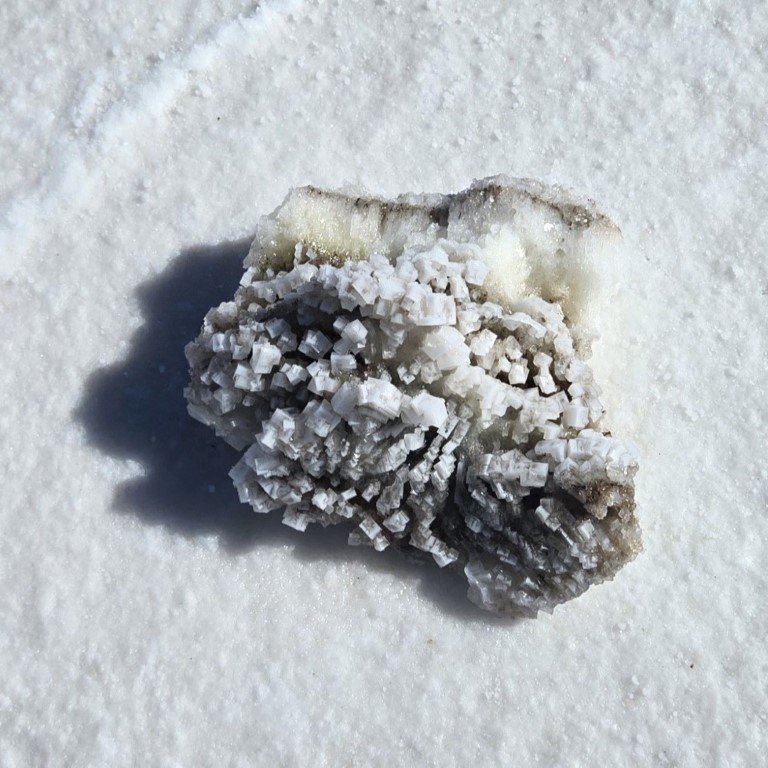
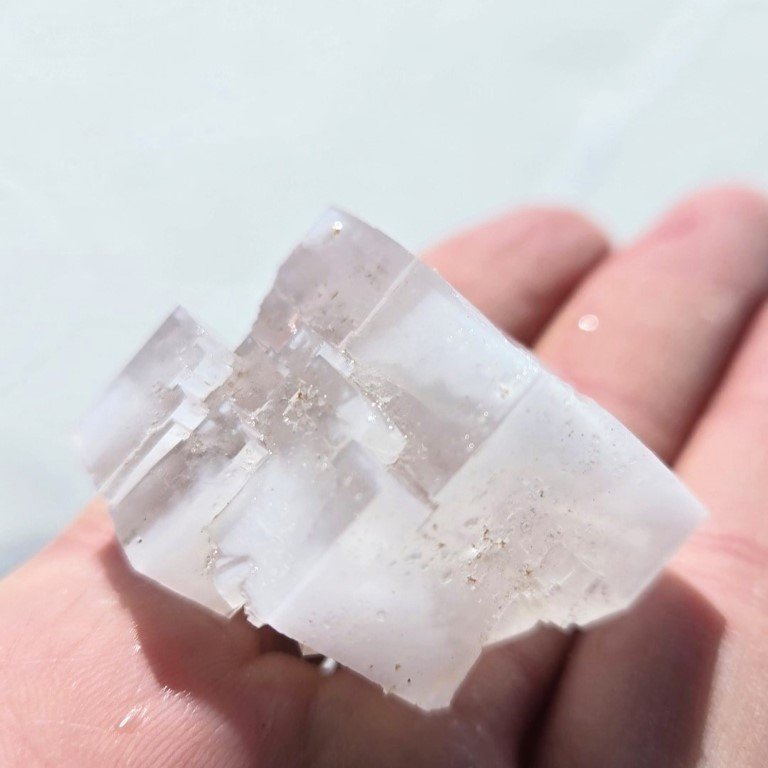
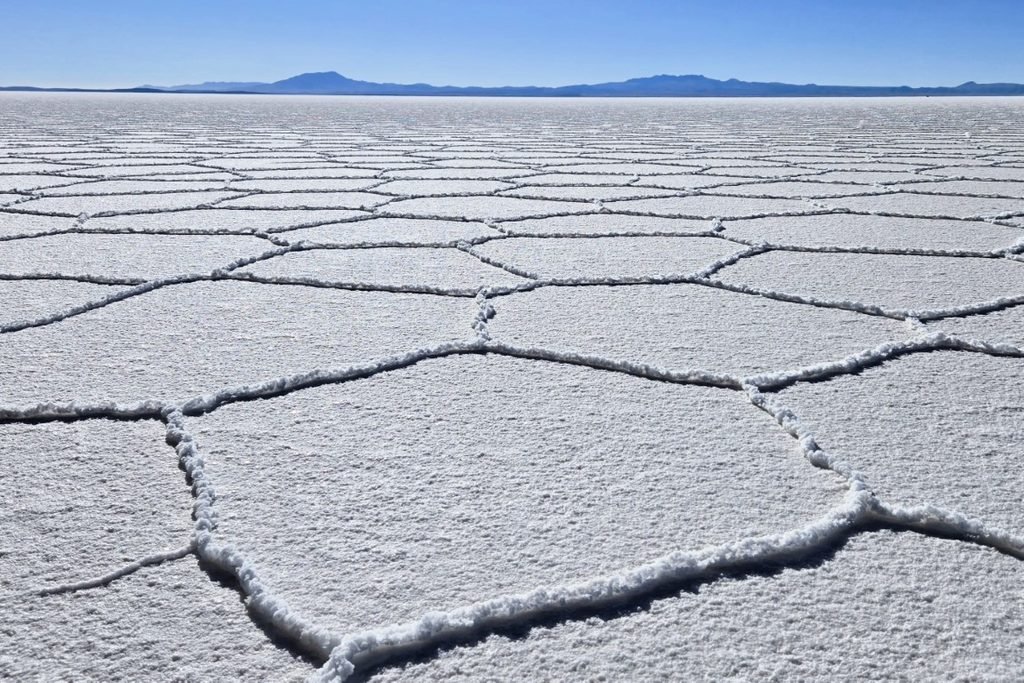
The hard and highly reflective surface absorbs little sunlight during the day, while the temperatures at night can drop well below freezing. This results in large temperature fluctuations between day and night, causing the salt crust to expand, contract, and eventually crack.
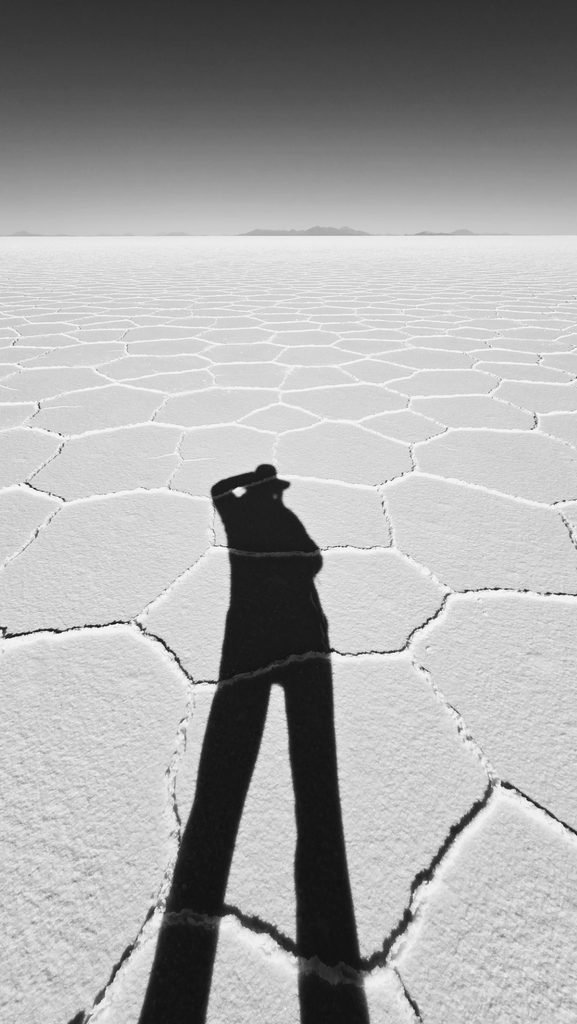
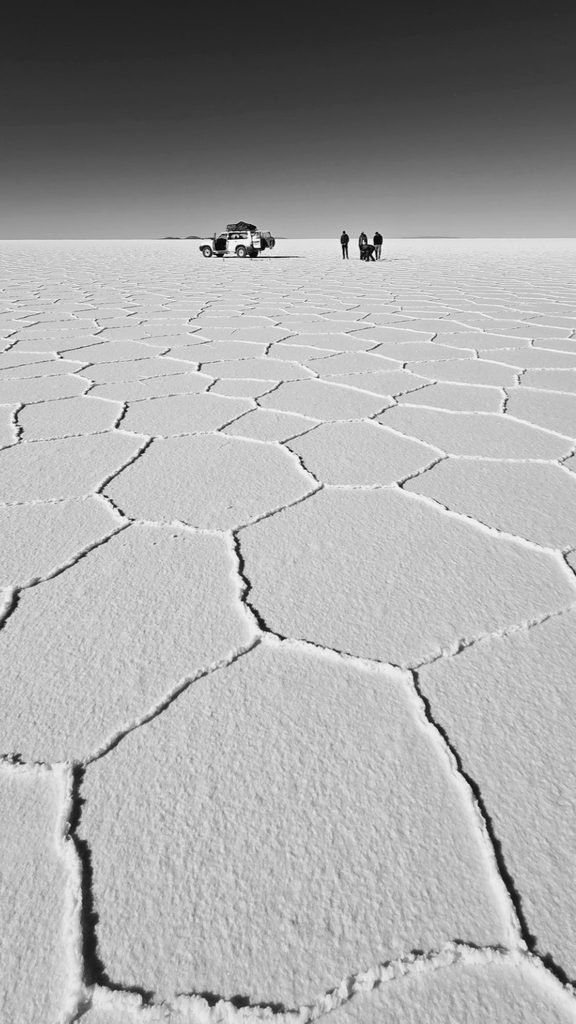
The cracks form polygonal patterns, mostly hexagons measuring one to two metres across.
Why hexagons, and not squares, triangles, or circles?
Because hexagons are an efficient way to create and propagate cracks across a surface for even stress relief. Squares and triangles concentrate stress at their corners, making the material more prone to further cracking, while circles cannot tile a surface without leaving gaps. This is why hexagons are nature’s favorite pattern and can be found in honeycombs, basalt columns, and drying mud.
Variations in salt composition and environmental conditions create irregularities in the polygons. Each crack is highlighted by a small ridge. As the surface dries and contracts, it draws the saltwater lying beneath to the surface. When the water evaporates, it leaves behind concentrated salts and other minerals along the edges.
This process is self-regenerating: no matter the damage caused to the surface or the tracks left behind by cars, a pristine, flawless white surface with well-defined polygons will reappear, erasing all evidence of human activity.
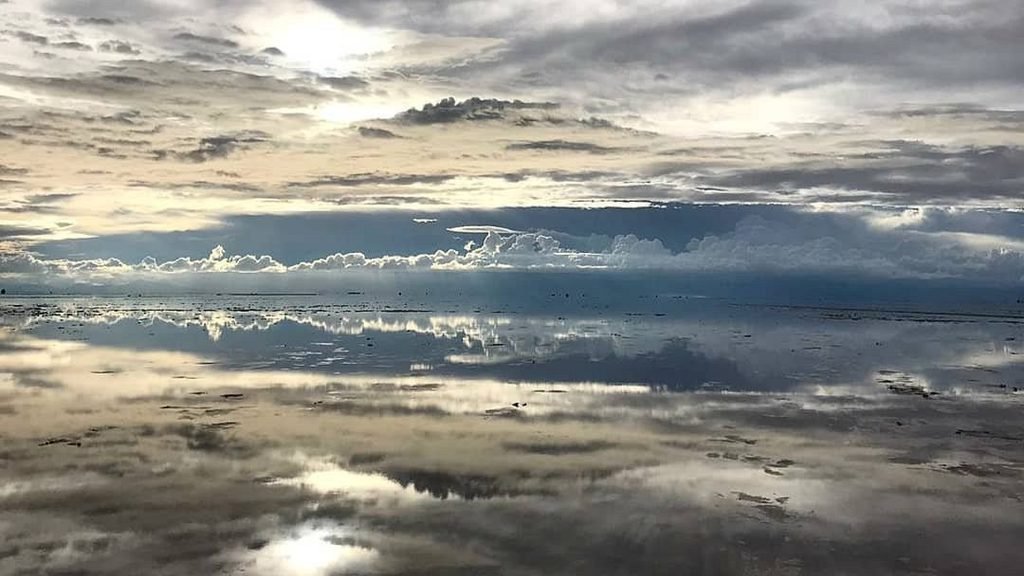
During the rainy season, a thin layer of water accumulates across the flats, creating the otherworldly mirror effect for which the Salar de Uyuni is famous. The water also makes the surface electrically conductive, restricting driving speed to 5 km/h to avoid draining the batteries.
The few dozen people living around the Salar make a living from llama meat sales and salt extraction. Much of the salt is processed in Colchani, a village on the eastern edge of the Salar. Salt extraction is not a quick win: it involves hours of digging and cutting salt from the flats, where the salt burns the skin, the intense sun damages the eyes, and the wind weakens the spirit, all for a few bolivianos.
In the past, local communities exploited the salt primarily for trade with other indigenous communities, transporting it in llama caravans. The llamas wore leather shoes and visors to protect their feet from the salt and their eyes from the intense glare.
Salar de Uyuni is one of the planet’s largest deposits of magnesium, potassium, nitrogen, phosphorus, borax, and lithium, today’s precious mineral. Lithium powers modern technology like the rechargeable batteries of electric cars and smartphones, pressing the Bolivian government to pursue extraction projects despite the potential consequences for these fragile ecosystems.