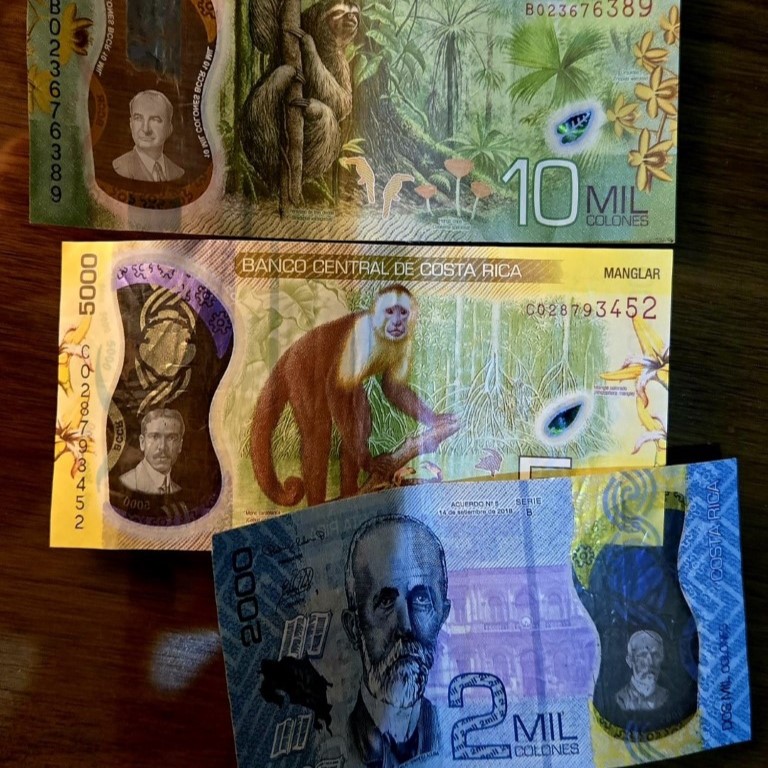
* The dollar ($) is the Canadian one (CAD), and prices are based on the current 2025 conversion rate
In the summer of 2025, I spent a full month living in Costa Rica—not on vacation, not hopping between beach resorts, but actually living there. I arrived on May 1, right at the beginning of the rainy season. Since I came straight from Medellín, I’ll use Colombia as my baseline for comparing day-to-day life in Costa Rica.
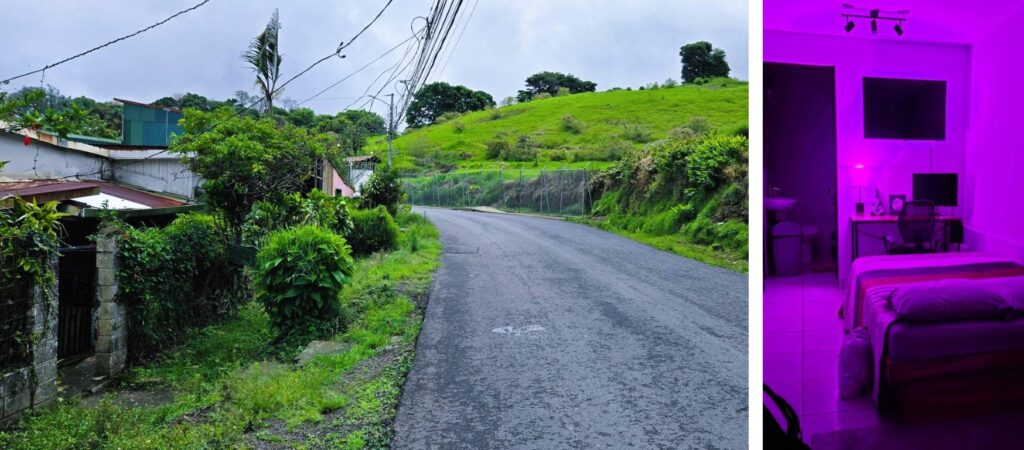
Costa Rica is the tropical poster child for northern vacationers, the OG influencer destination. But honestly, I wasn’t immediately blown away. It had to grow on me. Like any destination, the real country reveals itself once you get beyond the tourist zones. That’s where you find the real charm: the people, everyday life, and moments that aren’t staged for show. Still, it got me thinking: why does everyone rave about Costa Rica?
It’s a sizable place, with about half the population of Cuba, yet its extensive coastline makes it feel like an island. It tends to stay out of the headlines thanks to its political stability, and it’s the ultimate “green guilt” getaway, with its ethical gold star and national park system cramming 5% of the world’s biodiversity into just 0.03% of the Earth’s landmass.
But when it comes to living costs, it’s a different story. Costa Rica is the most expensive country in Central America, and possibly one of the most expensive in Latin America. A month here cost me about the same as a month in Canada—yep, that expensive—and around 66% more than in Colombia. And that was without doing much: no bars, no restaurants aside from the occasional soda for basic survival, no tours or paid attractions… except for two weekend getaways to La Fortuna and Manuel Antonio.
Still, I traveled on a budget. Bus transport cost me about US$10 round trip to each destination. In La Fortuna, I spent a couple of nights at a jungle campground with a rented tent and mattress for US$10 a night, which was fantastic. In Manuel Antonio, a beachy jungle strip on the Pacific, I scored a same-day, last-minute deal: a massive double room with a private bathroom, large terrace, and breakfast included, all for the same price as a stuffy, smelly dorm bed—US$20 a night.
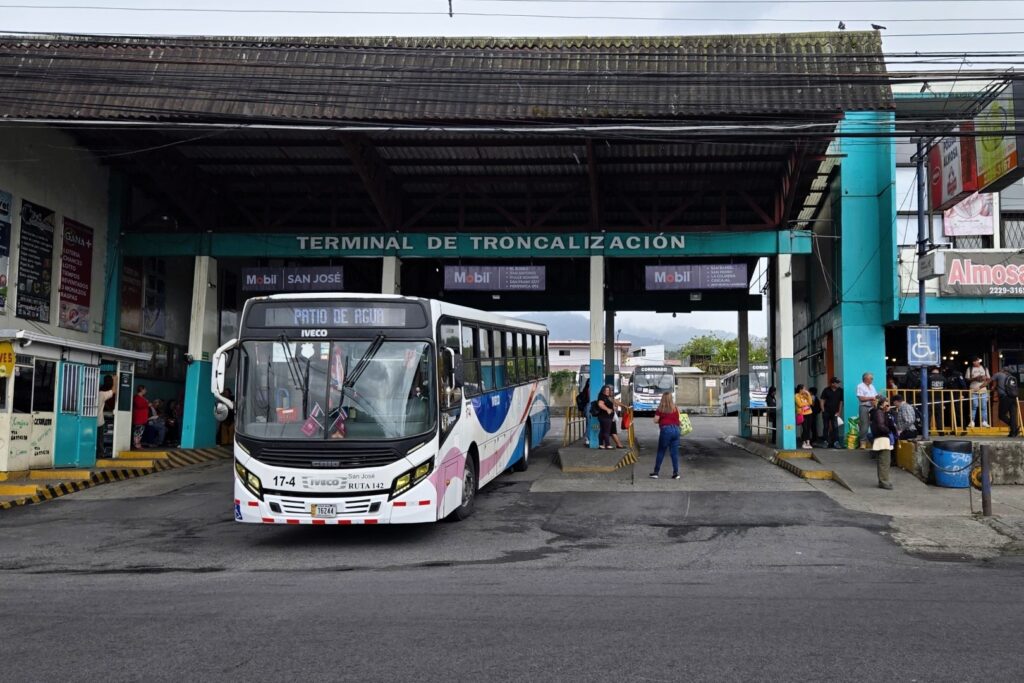
My monthly spending also included my flight from Colombia to San José, plus a splurge on a three-star hotel for the first two nights. I wanted a pool; it wasn’t worth it. I took a taxi from the airport because of my late-night arrival and grabbed Ubers when switching Airbnbs—twice. The rest of the time, I got around by bus and urban train, with rides costing around ₡500, or roughly US$1.
Fun fact: each bus had its own fare written on the dashboard. I’m still not sure whether it was based on the route, the driver’s mood, or the condition of the bus. They take cash only, although some have recently started accepting local bank cards.
La Comida Locale
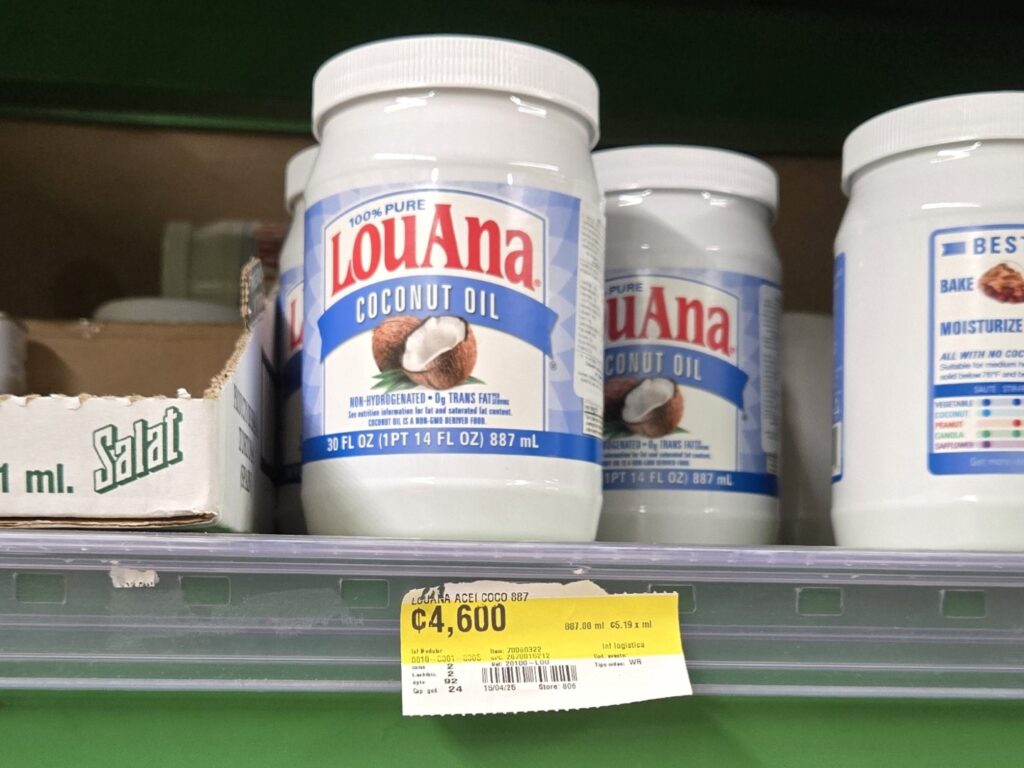
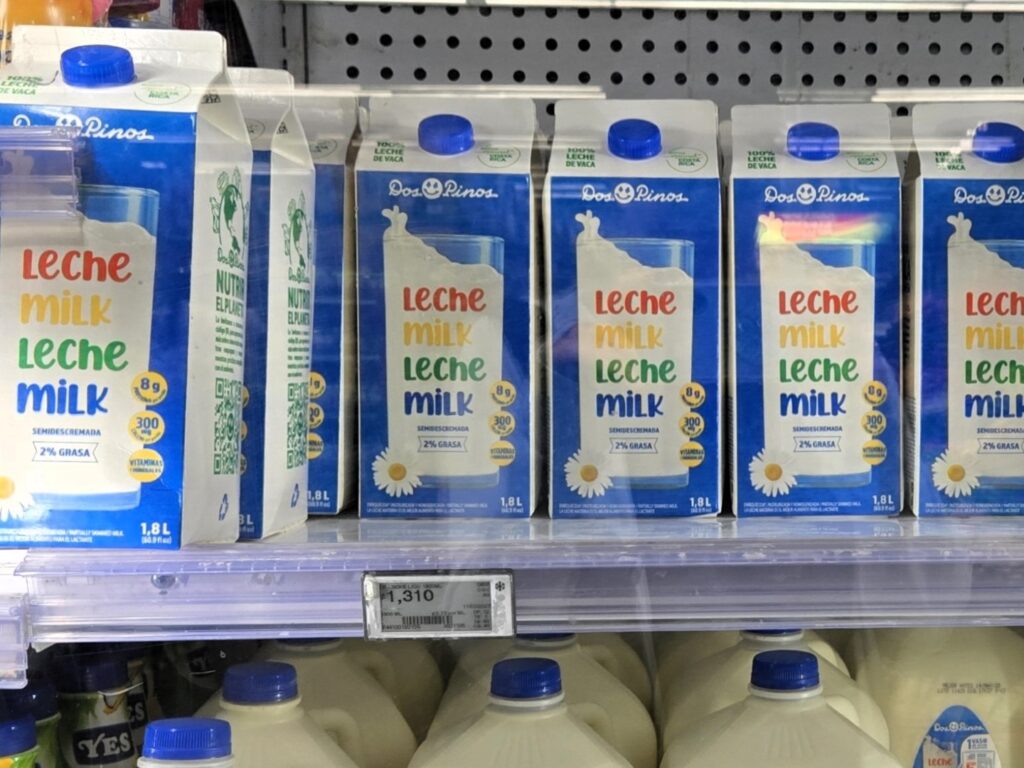
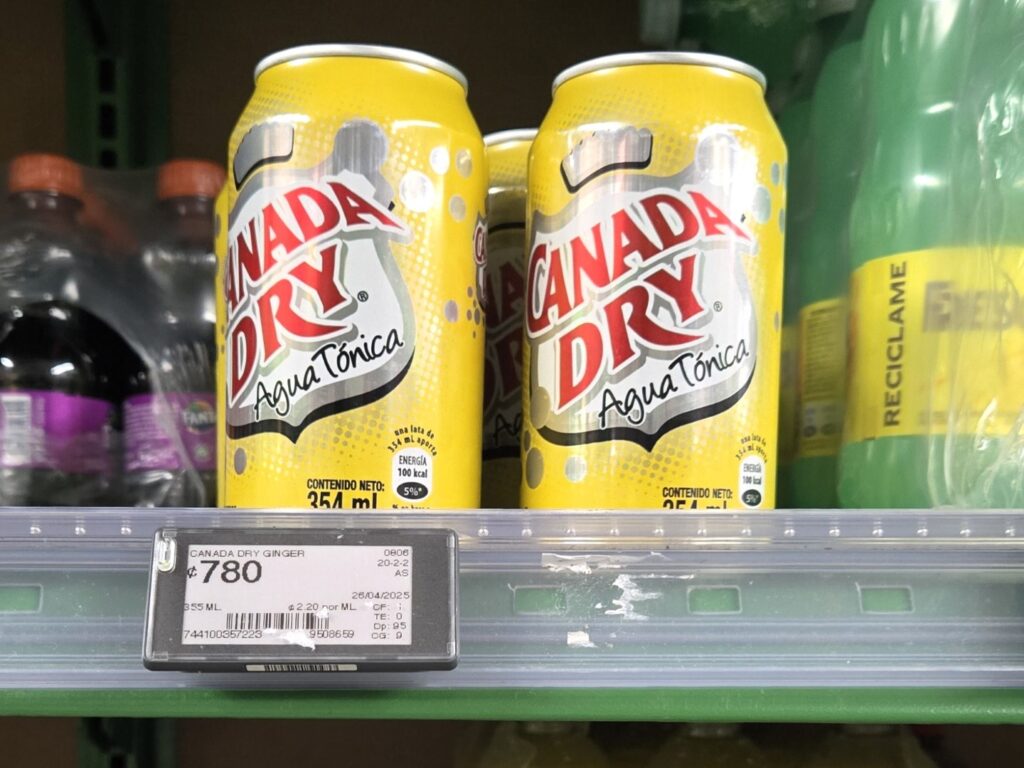
Food prices are absurd—especially, and ironically, for locally grown mangoes, papayas, and avocados, which often cost as much as in Canada, if not more. Imported beer from Portugal or Germany can be cheaper than the local stuff. A small cappuccino at Starbucks goes for around US$8 (₡2,800), the price of a full meal, but it’s one of the few places where you can actually work comfortably.
To keep costs down, I hunt for supermarket discounts just as I would back home in Canada. Maxi Palí has the lowest baseline prices, but Auto Mercado, a higher-end supermarket, offers better discounts, such as prepared meals for around $5 if you shop in the evening.
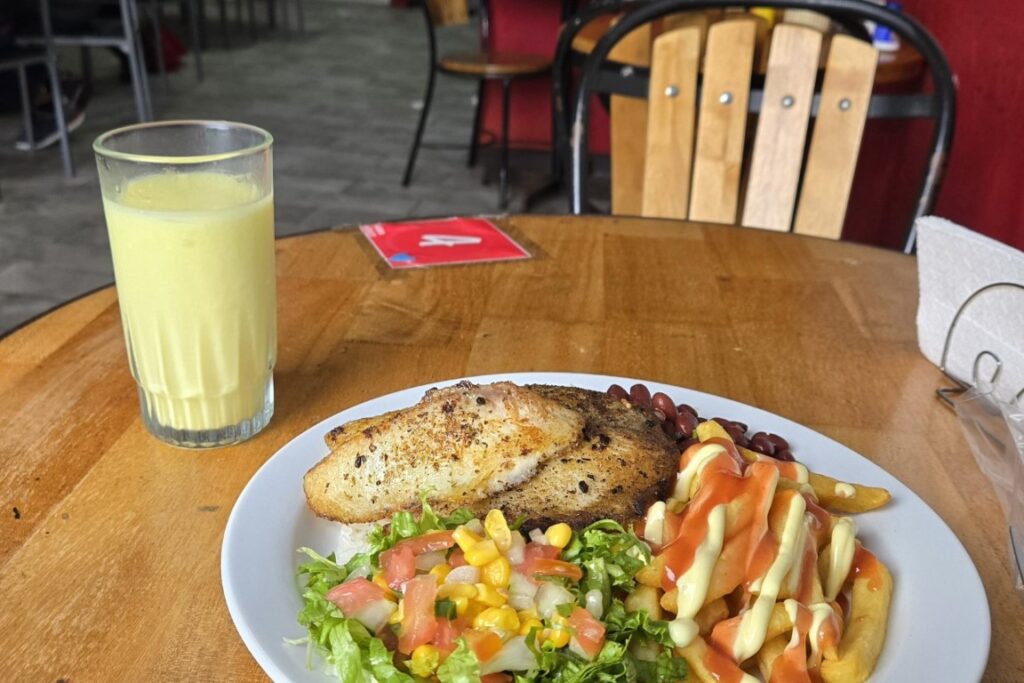
The cheapest meals are at local sodas—small eateries—with meals starting around ₡3,200, roughly twice what you would pay in Colombia. For that price, you get the standard plate: rice, beans, a tiny salad, fries, a portion of meat, and a sugary drink. No soup.
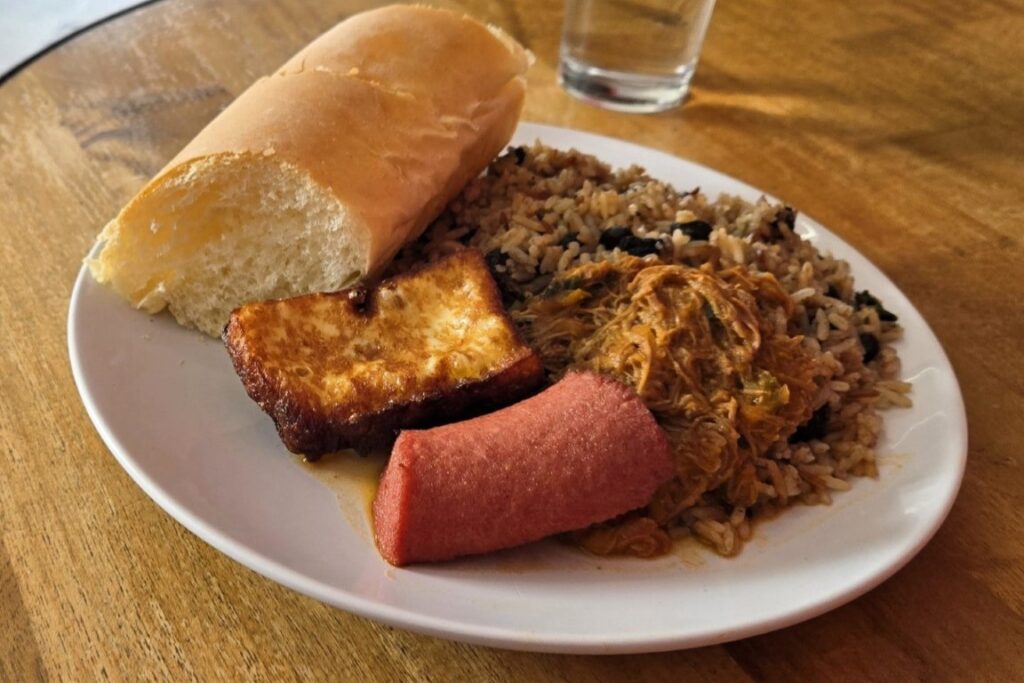
That said, the quality of food, especially baked goods, is generally better than in Colombia. A bean-and-meat empanada costs about $3 and is filling enough to count as a meal. Unlike in South America, but much like in North America, breakfast is the heaviest meal here: gallo pinto (rice and black beans), shredded meat, a neon-pink sausage of dubious origin, a block of fried cheese, and simple white bread.
Rock-bottom dining: the sodas
Typical breakfast: gallo pinto (arroz y frioles), fried cheese, sausage, shredded meat, and white bread = ₡2,900 / $7.70 (US$5.60)
Typical lunch: gallo pinto, salad, French fries, and a protein (fish), served with a sugary-creamy drink = ₡3,500 / $9.40 (US$6.80)
What You Can Expect to Pay at Grocery Stores

Free water, Flexible living
One perk is that potable water flows from almost every tap and, to me, tastes better than in Colombia—less chlorinated. Costa Rica has unusually broad access to safe tap water compared with much of Latin America.
When it comes to temporary housing, there’s also more variety and a better quality-to-price ratio than elsewhere in Central America. The slightly higher level of infrastructure makes short-term stays more appealing.
But what you save on rent, you lose on food.