The Gran Chaco is one of the most sparsely populated areas in South America, covering around 1.1 million square kilometers and spanning four countries: Paraguay, Bolivia, Argentina, and a small part of Brazil. A third of its area makes up half of Paraguay.
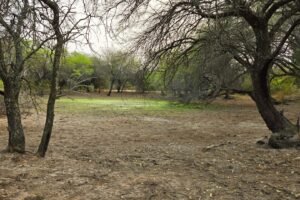
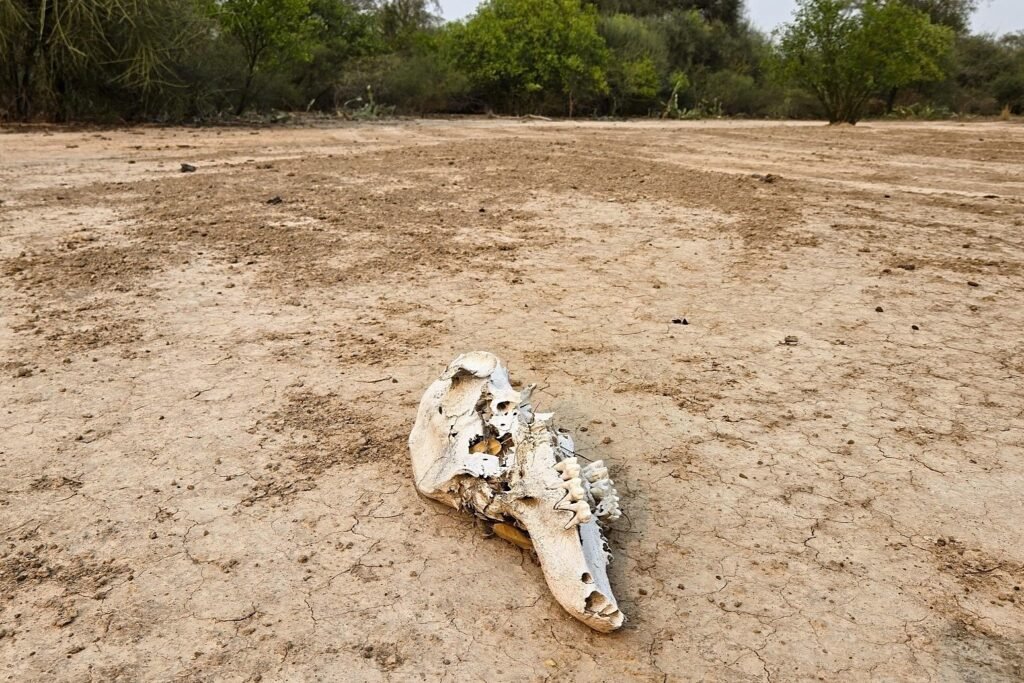
I’ve seen my fair share of subtropical landscapes, but the Chaco is unlike anything else: a surreal blend of environments that you don’t usually see together—patches of dense green forest in a near-desert landscape.
Known as the “Green Hell” for its dense, thorny vegetation and extreme conditions, with summer temperatures often rising above 40°C, the Gran Chaco is one of the continent’s toughest environments. Yet it is home to a surprising variety of wildlife.
Despite much of the region being dry, wetter patches can still be found in depressions where rainwater collects. Changes in rainfall and soil composition are reflected in the vegetation: the wetter east is characterized by clusters of trees and shrubs scattered among tall grasses, wetlands, and savannas, while the drier west is blanketed by forests of spiny bushes and low trees.
Endemic trees have adapted to these harsh conditions. Quebracho trees, for instance, produce extremely hard wood that is highly resistant to rot (quiebra hacha = axe breaker). These trees also support the growth of grasses in the savannah by creating “islands of fertility”: their leaves add soil nutrients, their shade reduces soil temperature and evaporation, and their roots redistribute water toward the upper soil layers.
Unfortunately, many quebracho trees have been cut down and burned to make space for cattle ranching, putting them at risk of extinction and dramatically transforming the Chaco landscape.
The palo borracho, also known as the drunken tree, looks bloated with its pear-shaped trunk, which stores water during dry periods. The softer, lighter wood has a spongy texture, while its pink or white flowers produce fruits filled with cotton-like seeds.