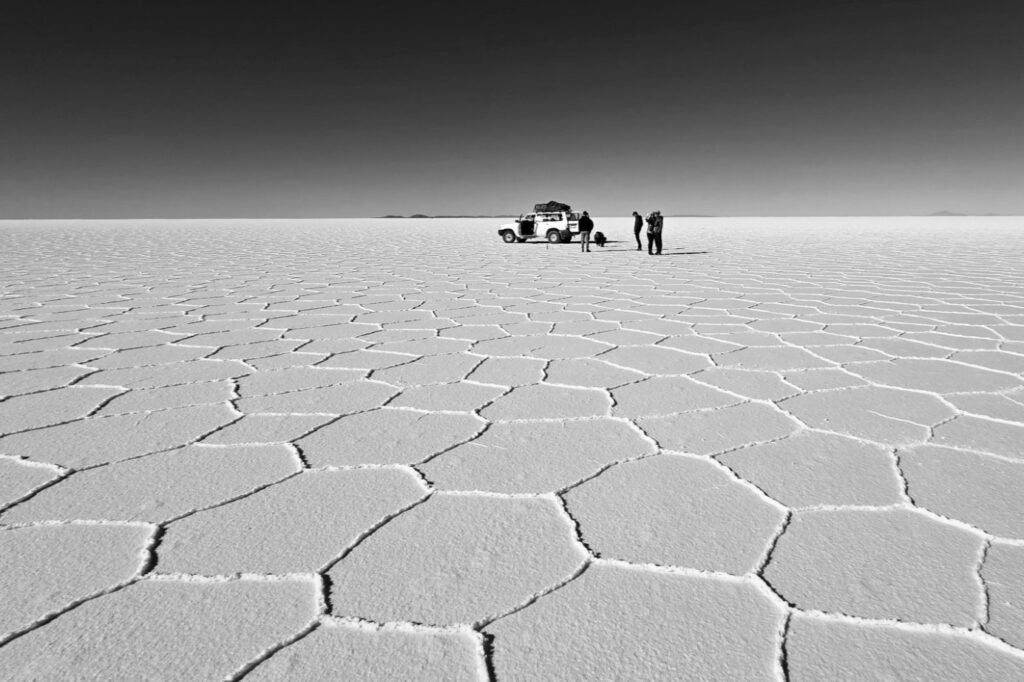
At first glance, it seems impossible for anything to make itself at home at such a high altitude and in such a barren land as the Salar de Uyuni. Animals should know better and get the hell out of there.
Yet, surprisingly, a four-day trip across this lunar landscape can turn into a safari of bizarre wildlife encounters without even trying. From wild llamas and giant cushion plants to rabbit-like rodents and flamingos feeding in toxic-red lagoons, life here has found unusual ways to survive.
Camel cousins: Llamas and Vicuñas
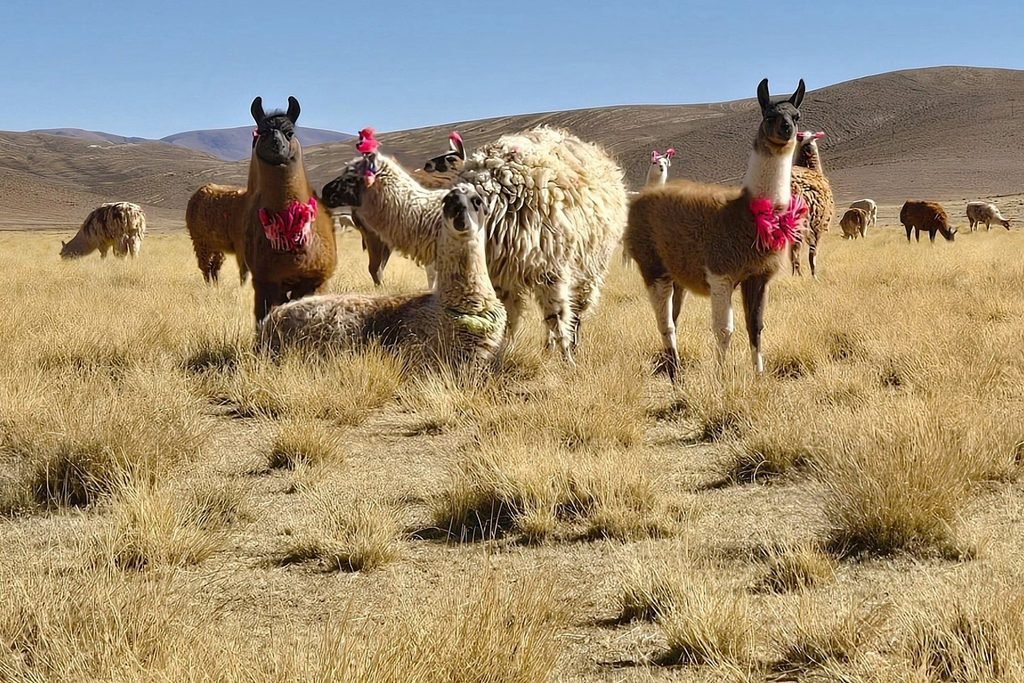
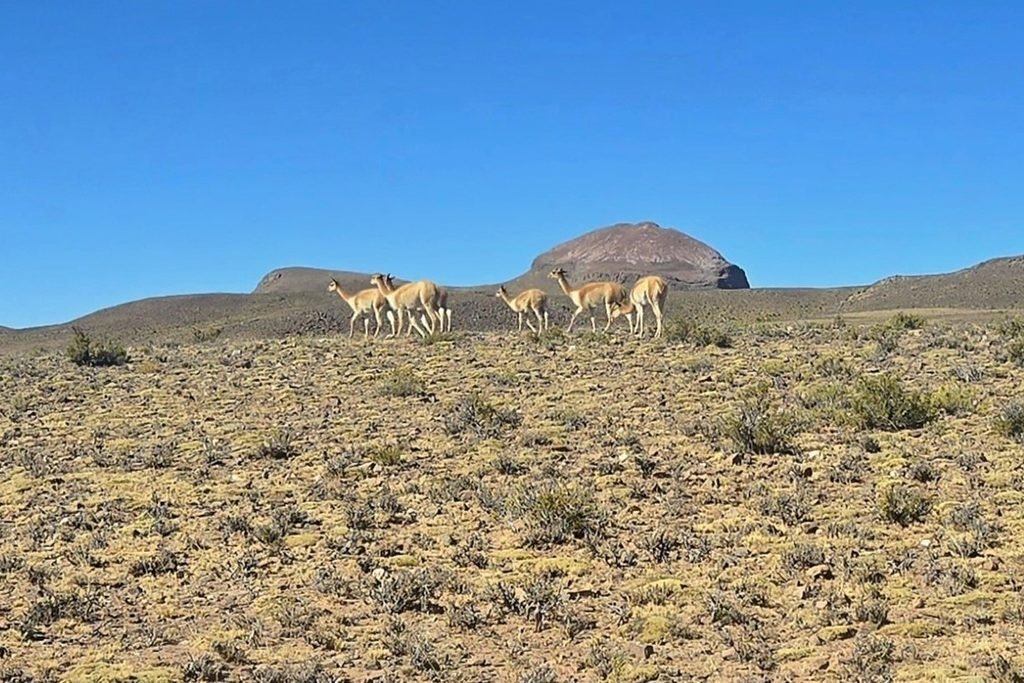
The Andes are home to four species of South American camelids: llamas, alpacas, vicuñas, and guanacos. Of these, llamas and vicuñas are among the animals you’re most likely to encounter around the Uyuni region.
Llamas were domesticated about 6,000 years ago as pack animals, thanks to their strength and size. They stand at almost two metres tall and come in a wide range of colours and patterns, from solid brown or white to spotted and striped coats.
Vicuñas are their smaller, wild relatives. Slender but well adapted to the harsh conditions of the Andes, they can live at elevations of up to 5,000 metres. They live in small family groups or larger herds and are exceptionally fast runners, reaching speeds of up to 80 km/h. They also produce some of the finest wool in the world.
Yareta: The Living Green Rock
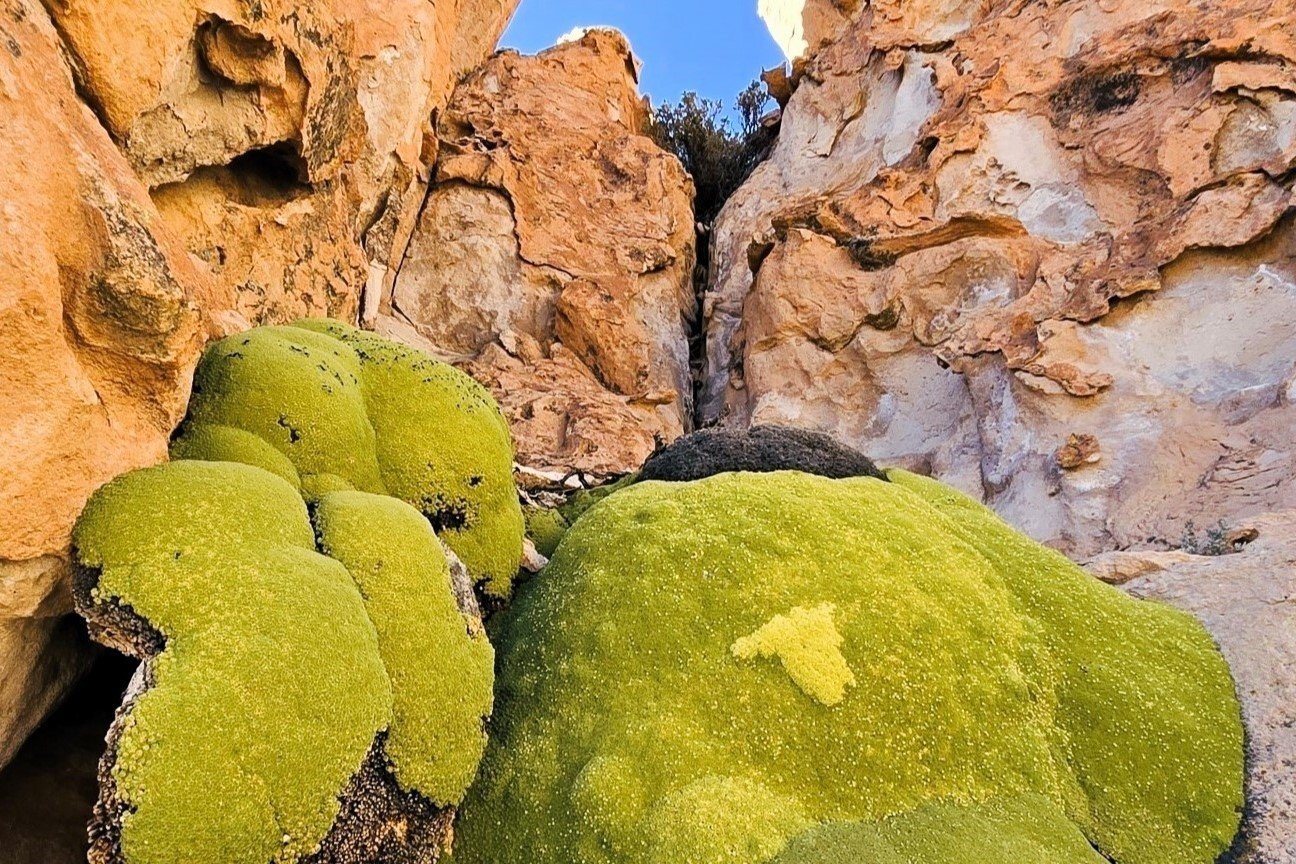
One of the strangest plants in the Altiplano is yareta, an evergreen cushion plant with a vivid lime-green colour and a surface that looks almost velvety. Yet its structure is as tough as stone, making it resemble a lump of moss-covered rock rather than a living plant.
Yareta is built for survival. It grows in the dry Puna of the Andes at elevations of up to roughly 5,200–5,300 metres and can form cushions up to six metres across. Its growth is extremely slow, with some large specimens estimated to be thousands of years old.
Viscachas: The Perpetually Annoyed Rabbits
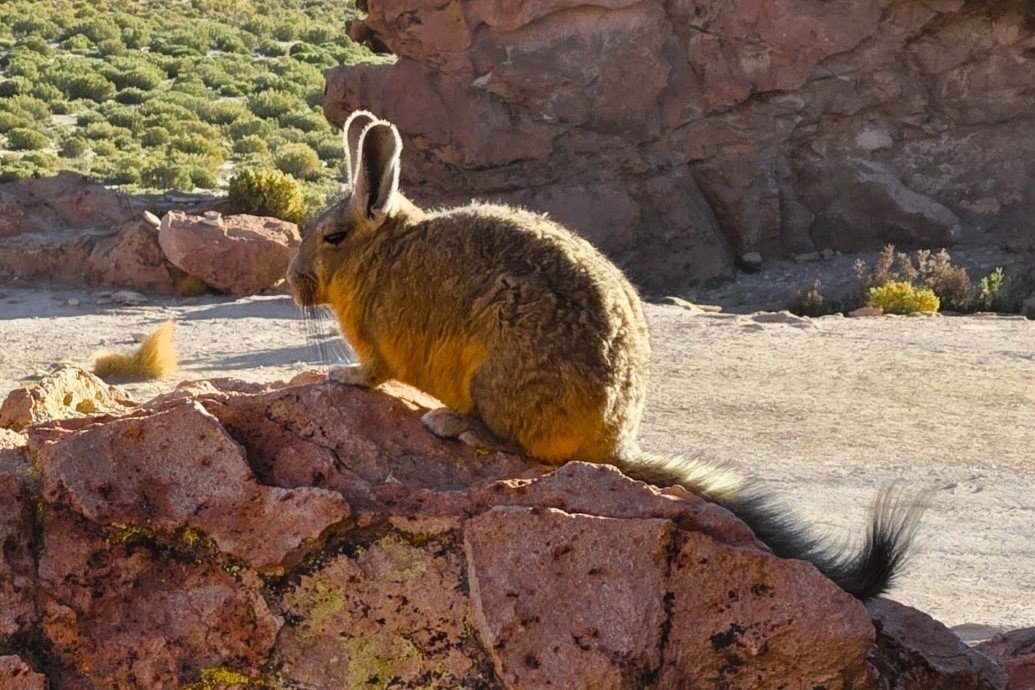
Viscachas look like oversized rabbits with an attitude problem, but they are actually rodents related to chinchillas. They are well adapted to the rocky, high-altitude environment and survive on the sparse vegetation available in the desert.
On Isla Incahuasi, in the middle of the Salar de Uyuni, viscachas can sometimes be spotted among the rocks and giant cacti. Their ability to survive in this seemingly barren landscape is impressive: the island is surrounded by an enormous white salt flat, yet these rodents manage to find enough food and shelter to call it home.
Cactus of the white desert
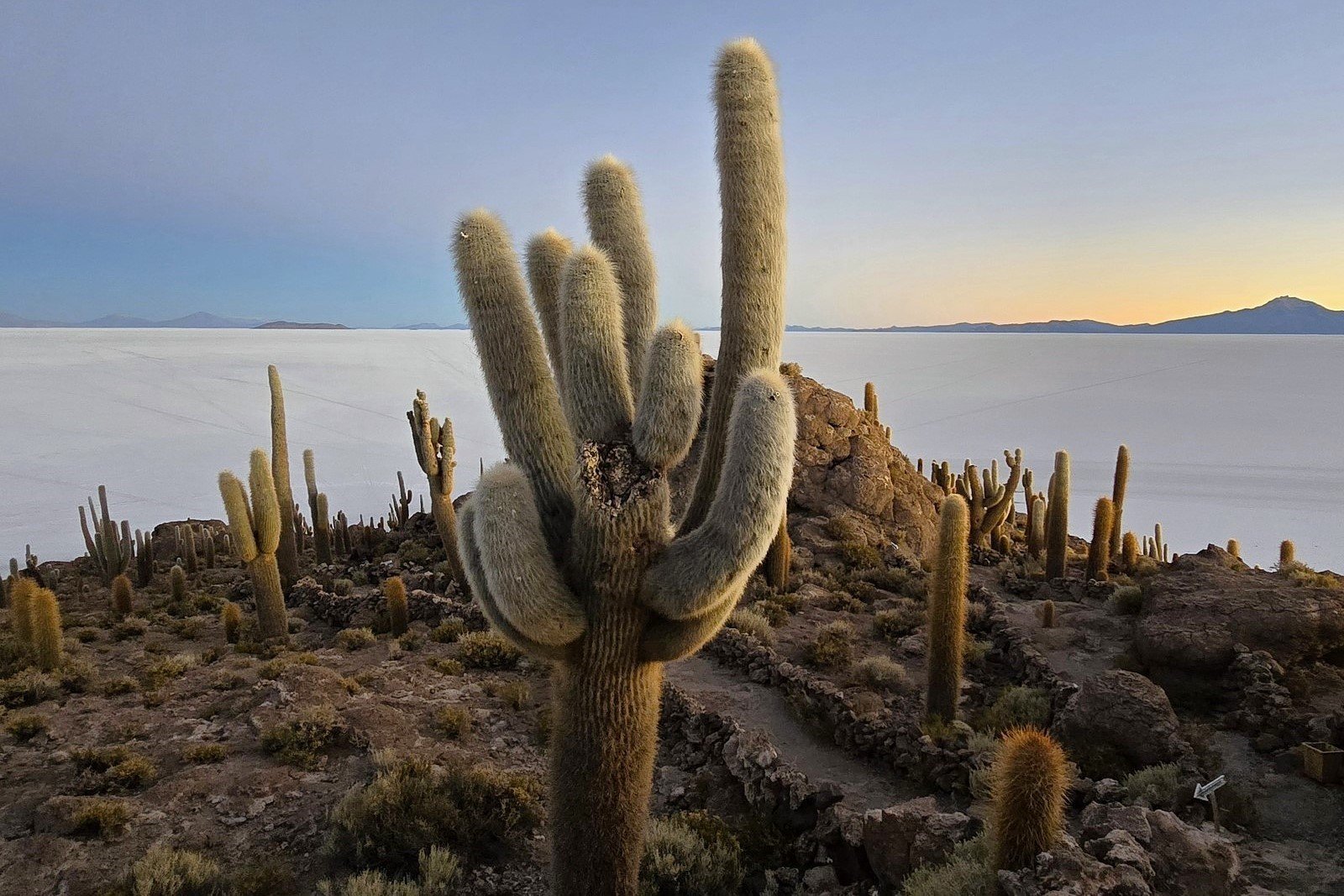
Isla Incahuasi, a rocky island in the Great Salt Flats of Uyuni, is covered in fossilised algae and giant cacti that are hundreds of years old. Early in the year, these cacti bloom with bright white flowers, attracting giant hummingbirds. Their trunks are the area’s only source of timber and are used to build doors and roofs in surrounding settlements.
Suri: The Ostrich of the Altiplano
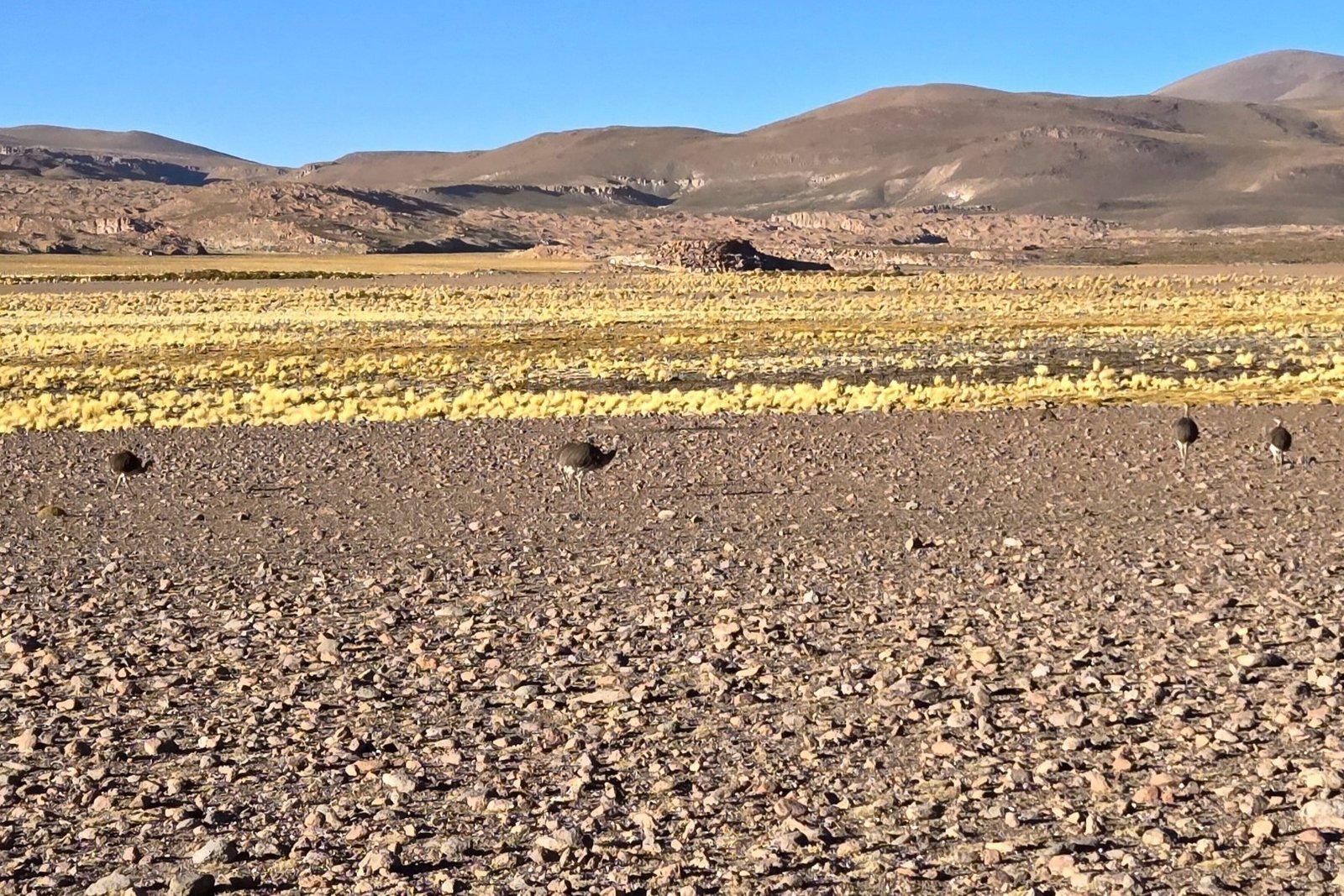
The suri is a large, flightless bird that looks like a small ostrich. It lives in the dry, sparsely vegetated landscapes of the Altiplano, where its long legs allow it to run across open terrain. Relatively rare, it is adapted to the harsh grasslands, wetlands, and semi-desert landscapes of the high Andes.
Red Water and Pink Flamingos of Laguna Colorada
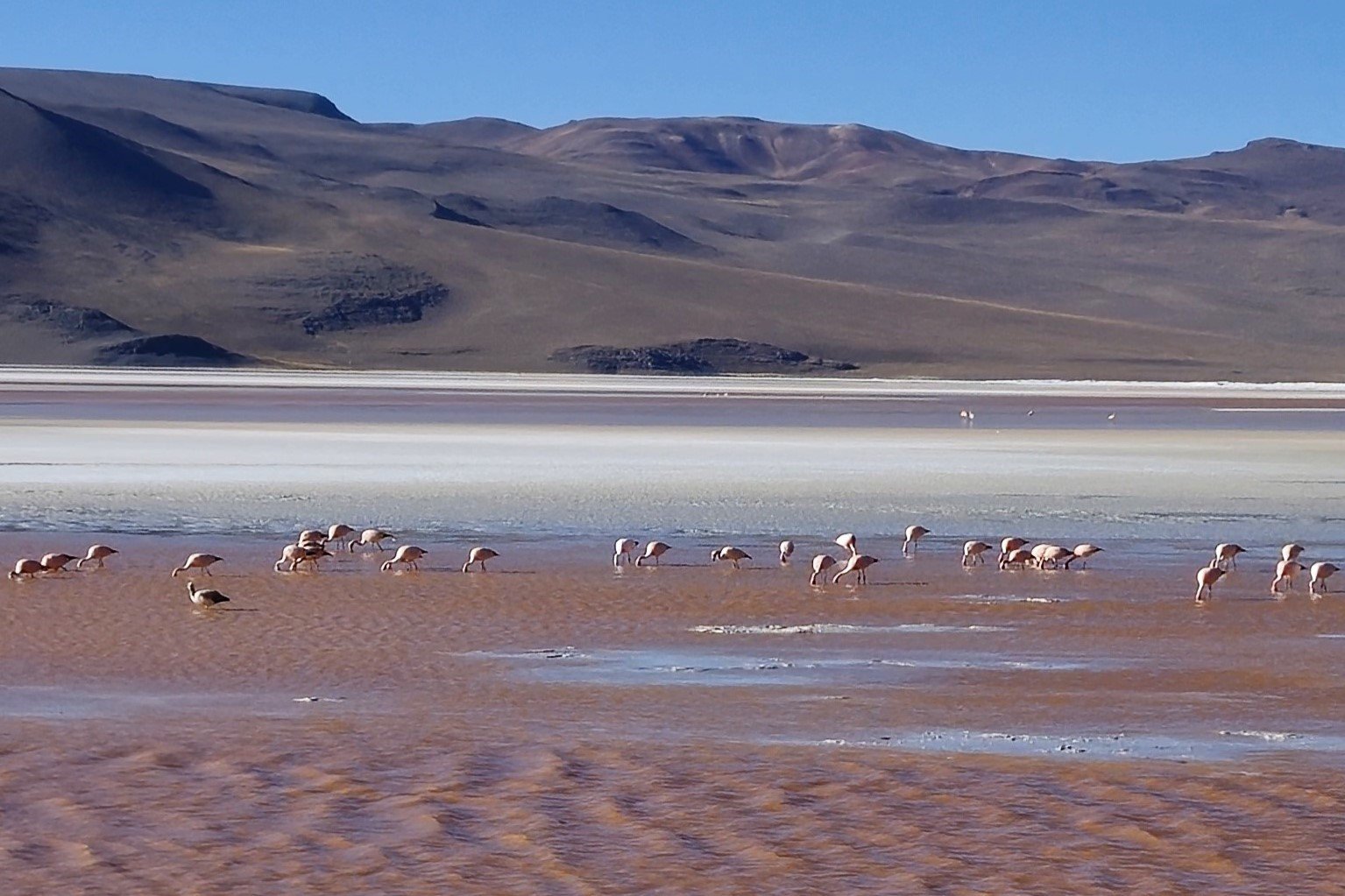
Further south, Laguna Colorada looks almost otherworldly. The shallow lake sits at around 4,300 metres above sea level, and its reddish colour comes from natural pigments produced by algae. The colour changes depending on the algae, salinity, temperature, and other conditions in the lake. Along the shore, white deposits of salts and borax—a mineral used in the manufacture of paint and glass—create a stark contrast with the red water.
Yet three of the world’s six flamingo species gather at Laguna Colorada, so there must be something worthwhile here. They feed on algae, diatoms, brine shrimp, and other tiny aquatic organisms living in the mineral-rich waters and sediments.
Flamingos use a powerful, piston-like tongue to pump water in and out through their bills. Comb-like structures called lamellae filter food particles from the water, with finer filtering structures particularly well suited to capturing micro-organisms.